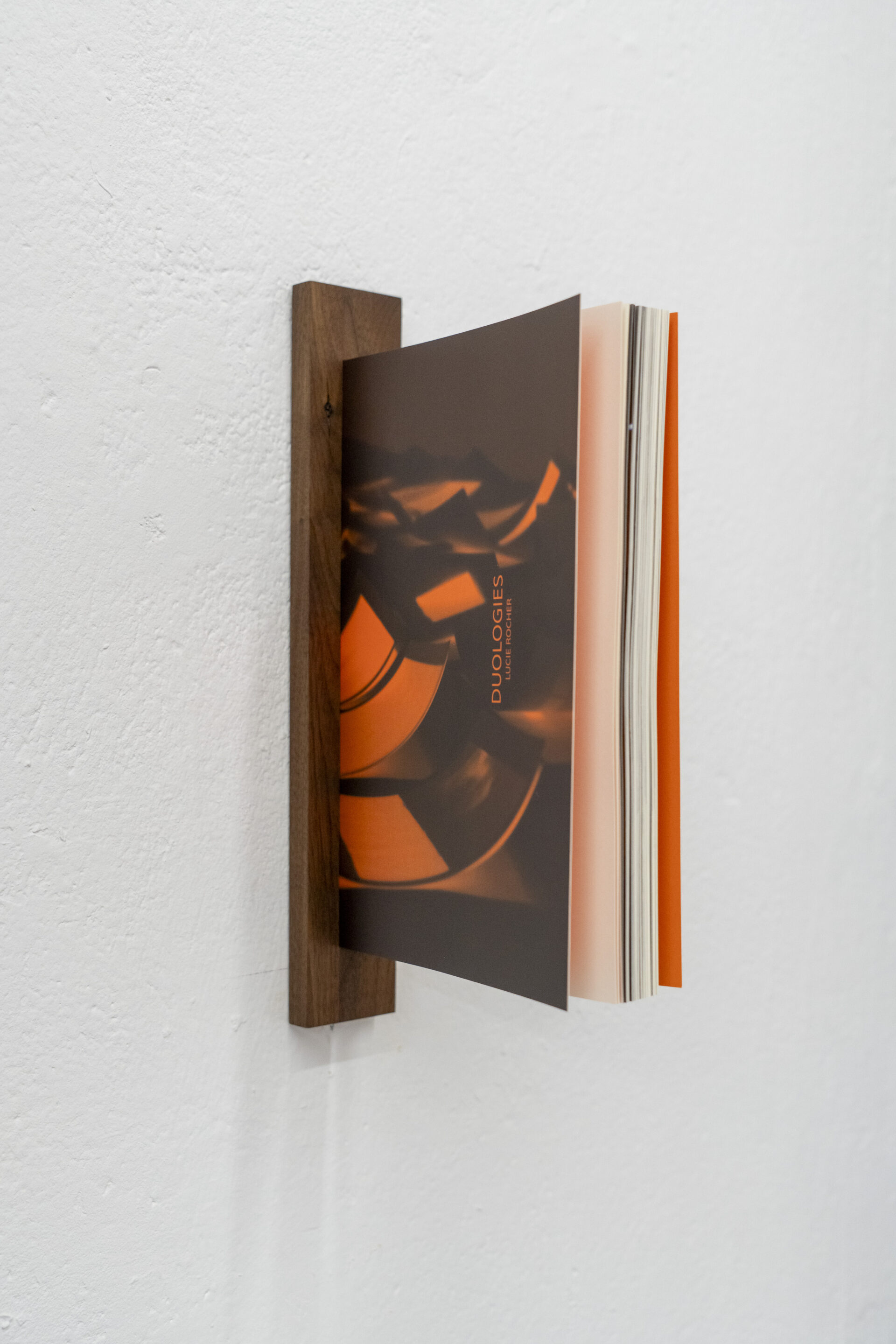
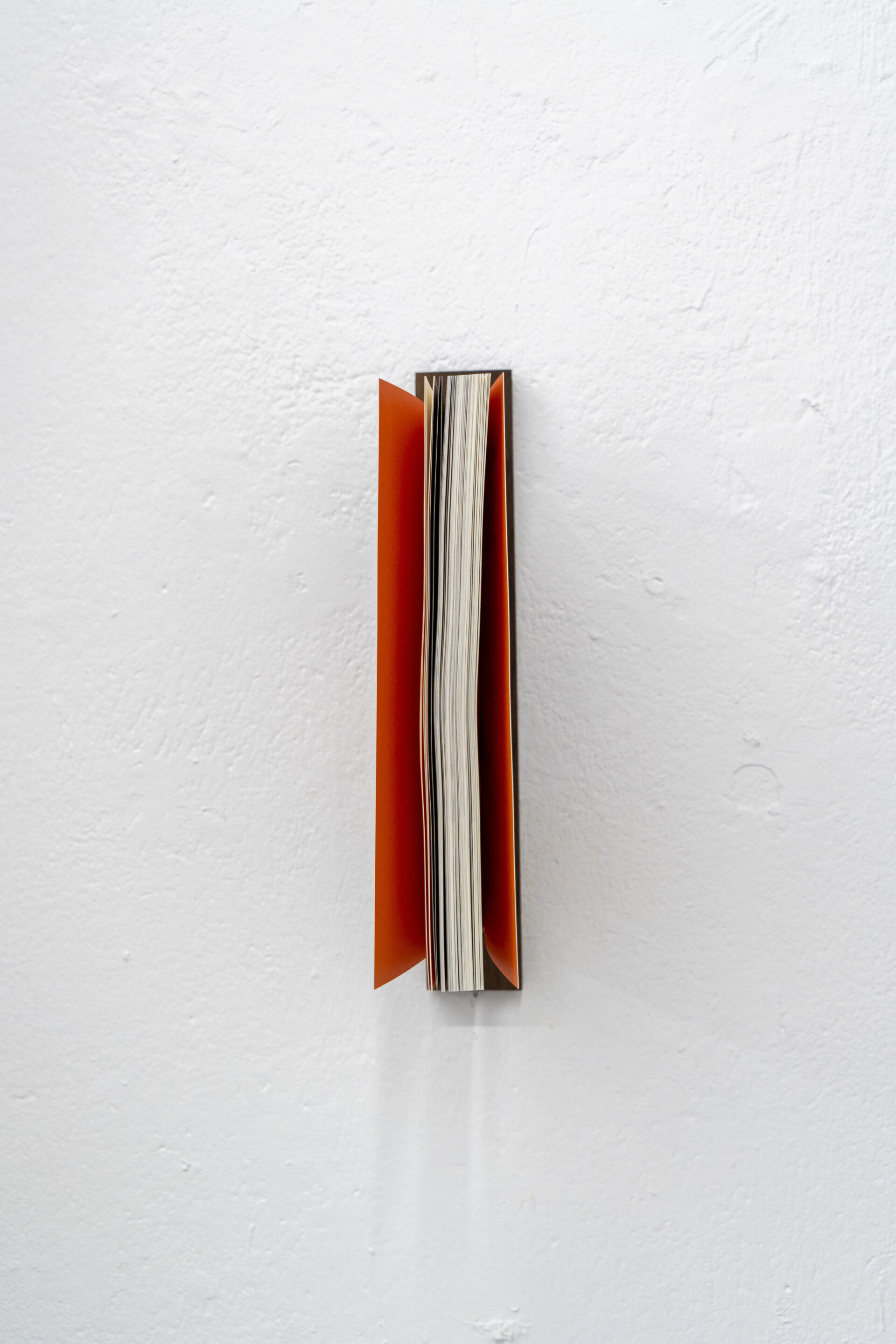
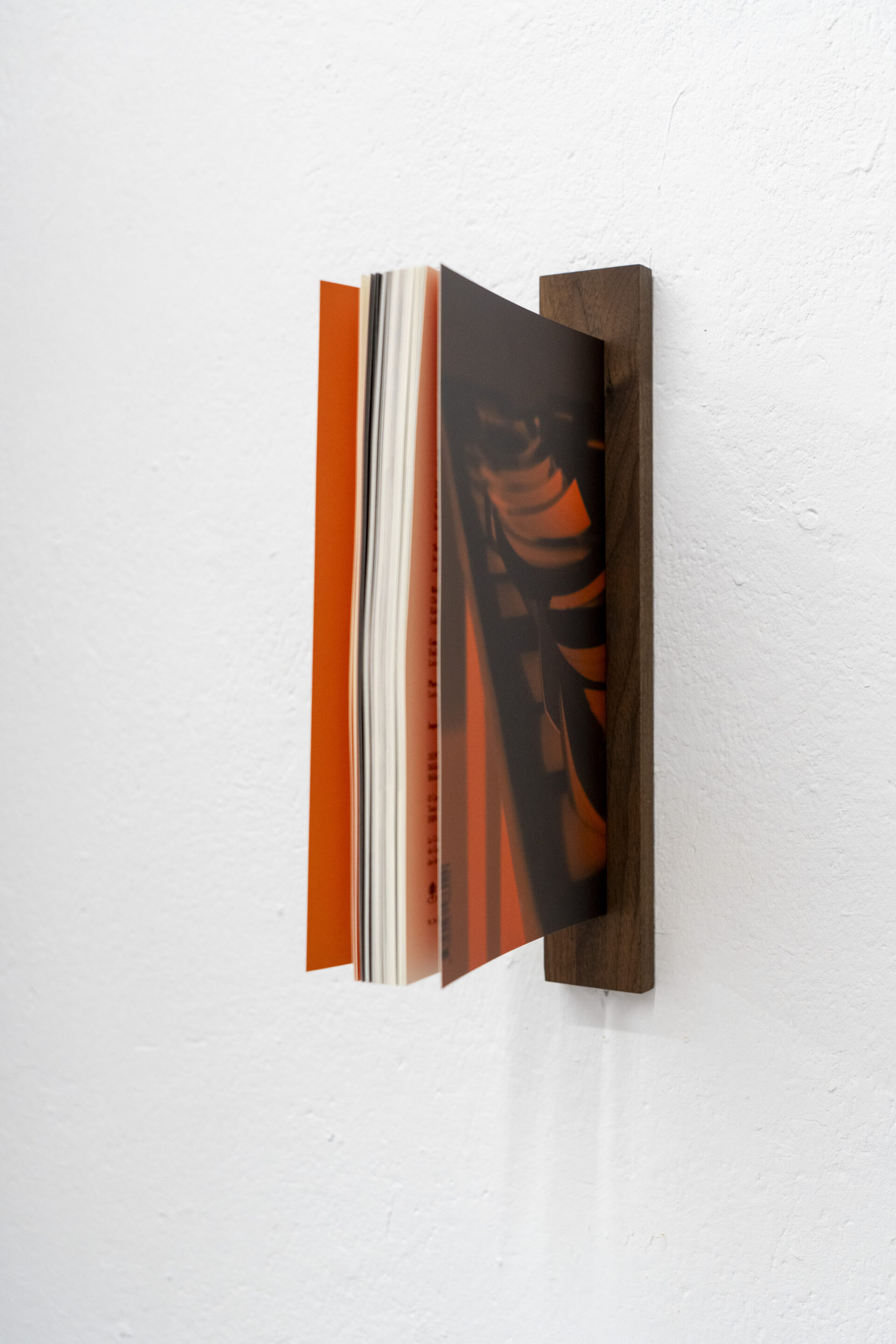
For over a decade, Lucie Rocher has been developing a photographic-sculptural practice based on the attentive observation of de-reconstructed spaces, where reality appears in a state of transition. She observes and captures fragments of architecture, unfinished facades, or structures in the process of being erected, in order to seize their intrinsic values. Whether dealing with an urban construction site, an abandoned building, temporary scaffolding, or an insignificant detail, her gaze lingers on the operations of reassembly and transformation that constitute them, even more so than on the places themselves.
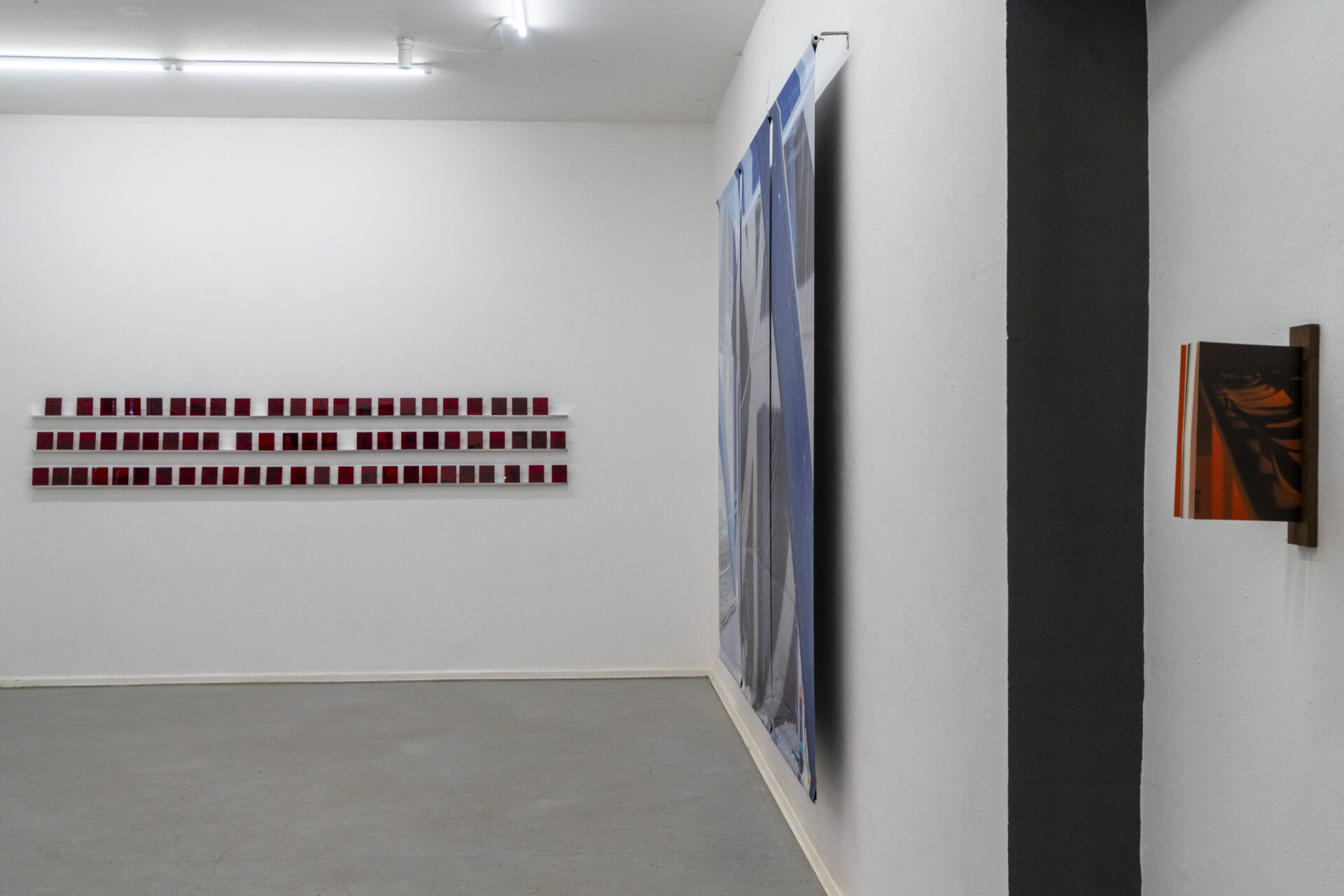
The exhibition À peu de chose près, specifically conceived for ROSALUX, brings together three recent works—Les variables [The Variables], Les espaces négatifs [Negative Spaces], and Les possibilités obliques [Oblique Possibilities]—into a body of work that bears witness to a progressive shift of photography toward its spatial potential. Images are no longer merely fixed; they are rearranged on surfaces associated with construction. Manufactured wood, recycled PVC banners, and colored plexiglass become the supports for a reflection on the materiality of the image in the digital age, dominated by the algorithmic regime of AI. Today, daily life is filtered and predictable: rather than observing the mutations of the built world around us, we contemplate streams of images compressed within the luminous surface of our screens.
À peu de chose près evokes a minimal, almost imperceptible shift; an uncertain space in which a viewpoint or a material tips toward another interpretation of reality. In Rocher’s work, it is often transformations—a variation in the support, an imbalance of the framing by a few centimeters, an inversion of tones, a displacement of the gaze—that profoundly alter our way of perceiving photographed spaces. The image never appears as a fixed given; it remains a construction site of limitless possibilities. It constructs transitional moments from these unstable conditions by reworking photographic gestures and knowledge. The aim of her photographic practice is to reveal the successive transformations of her immediate surroundings and to render the subtleties of her working process perceptible in a different way.
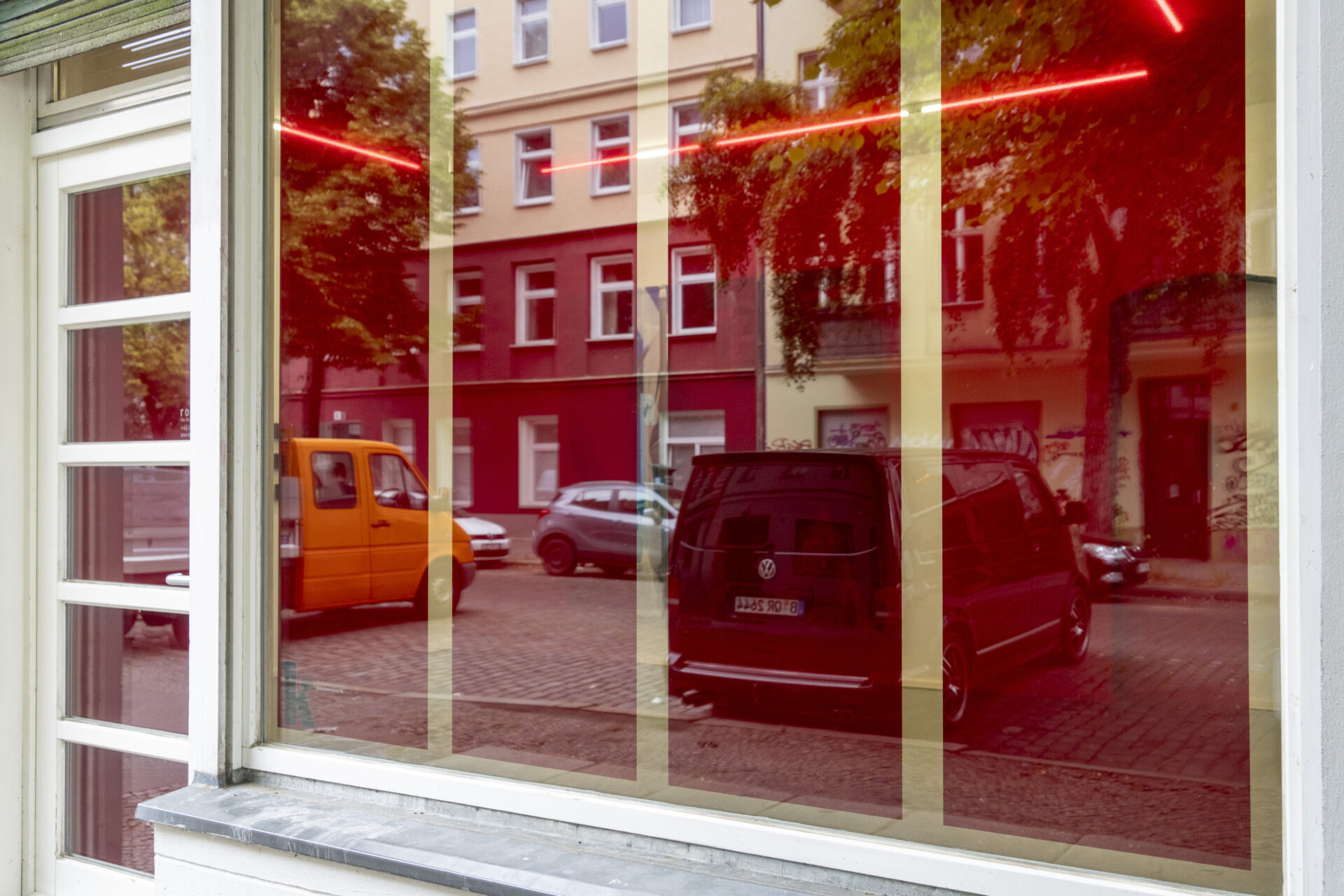
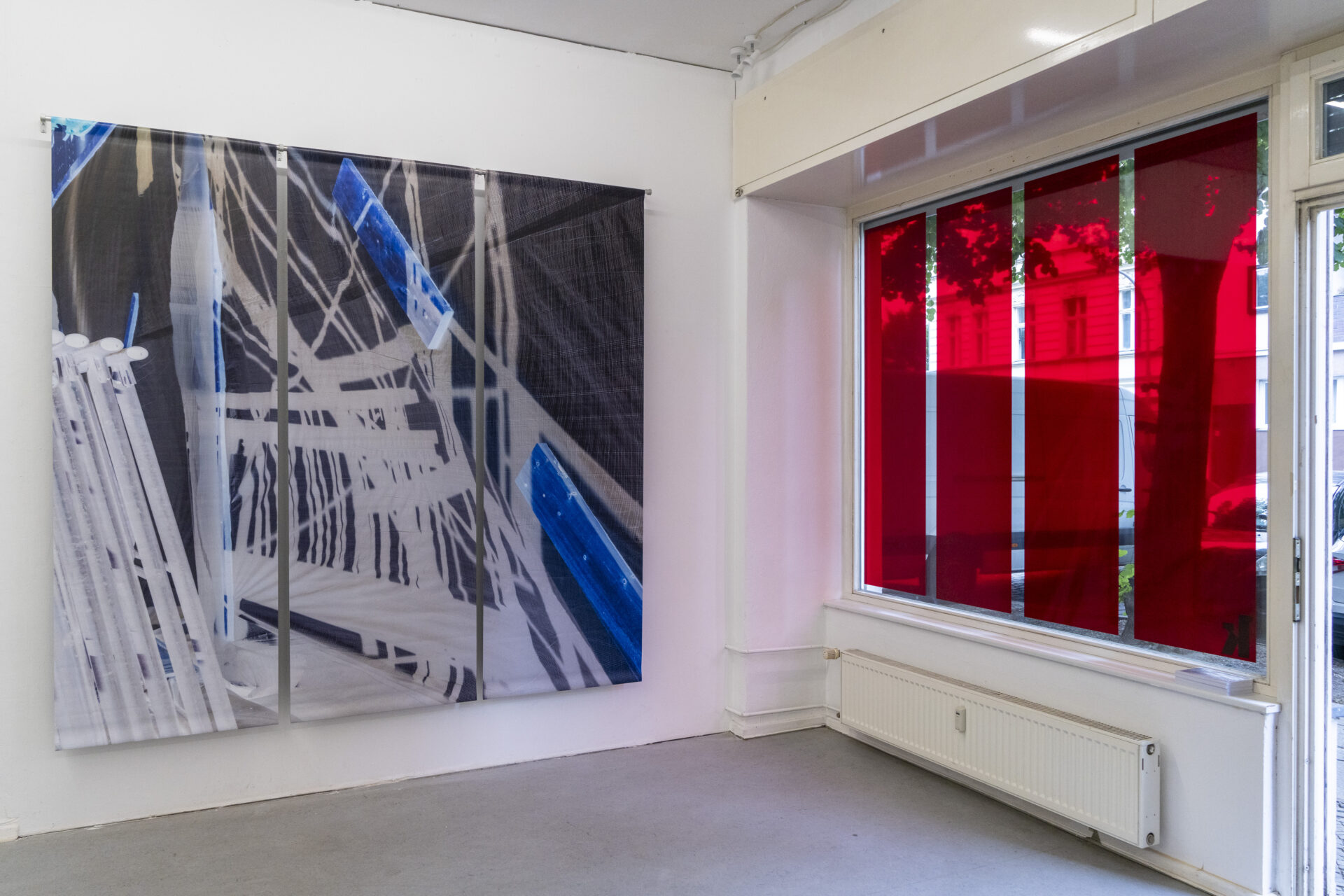
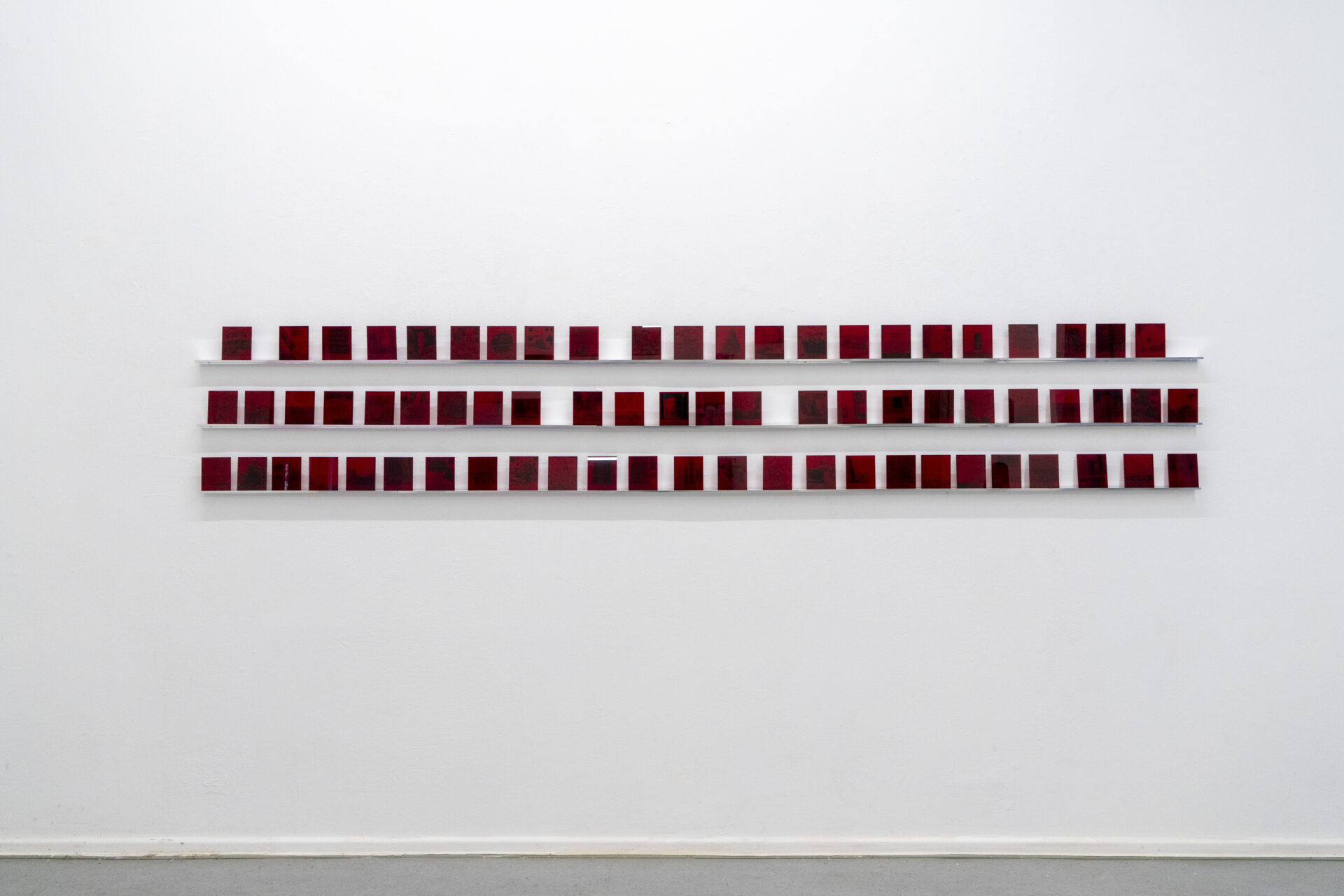
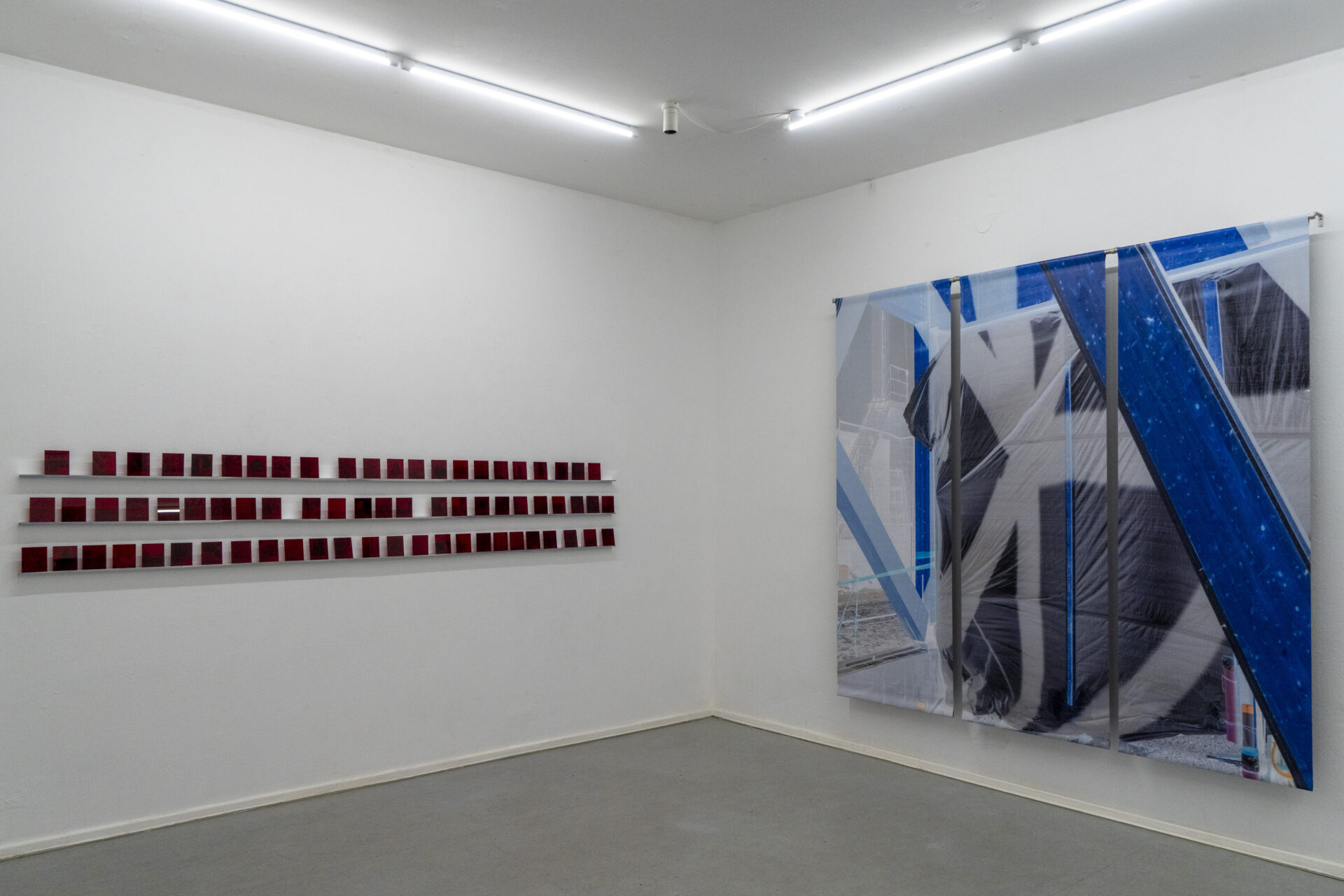
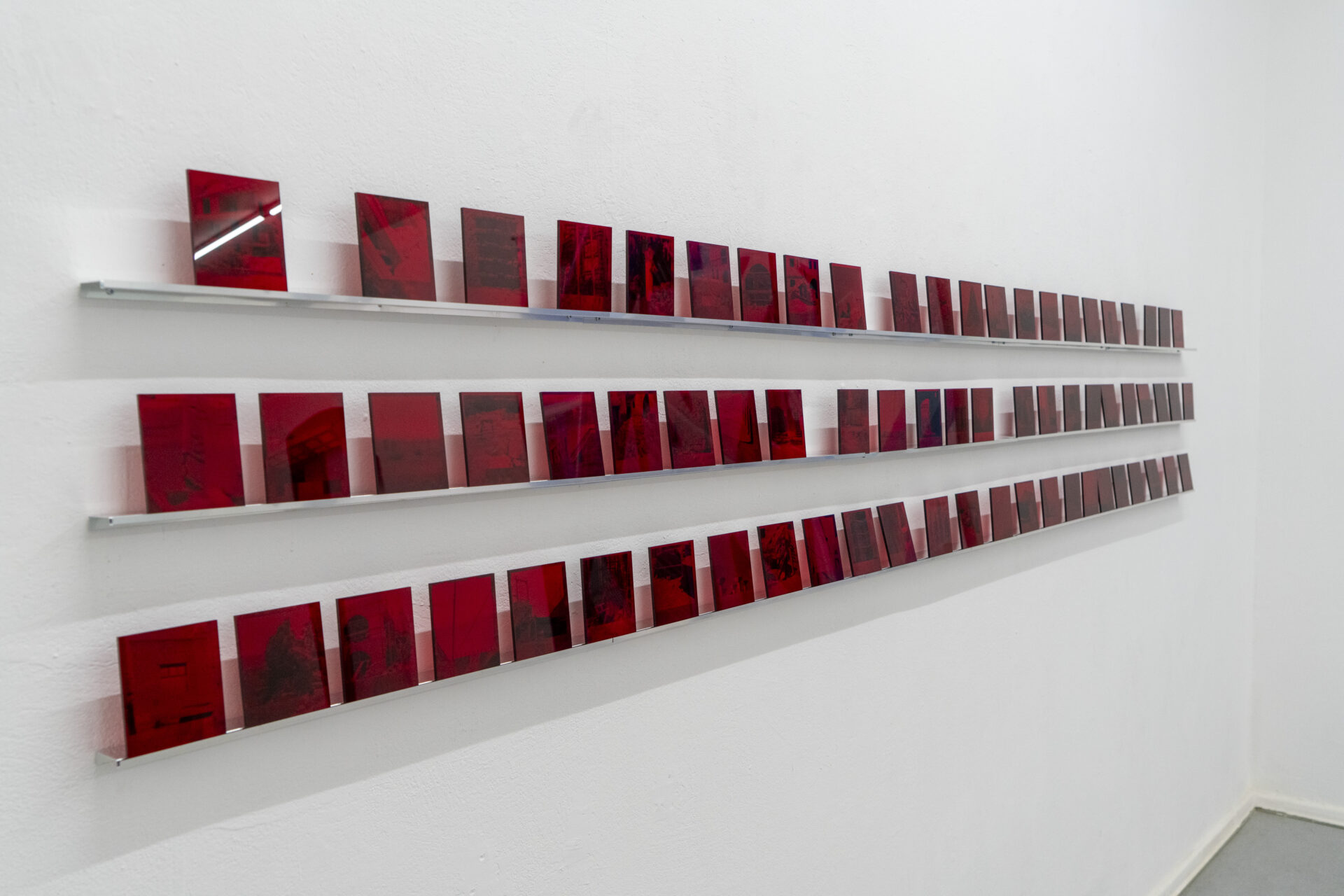
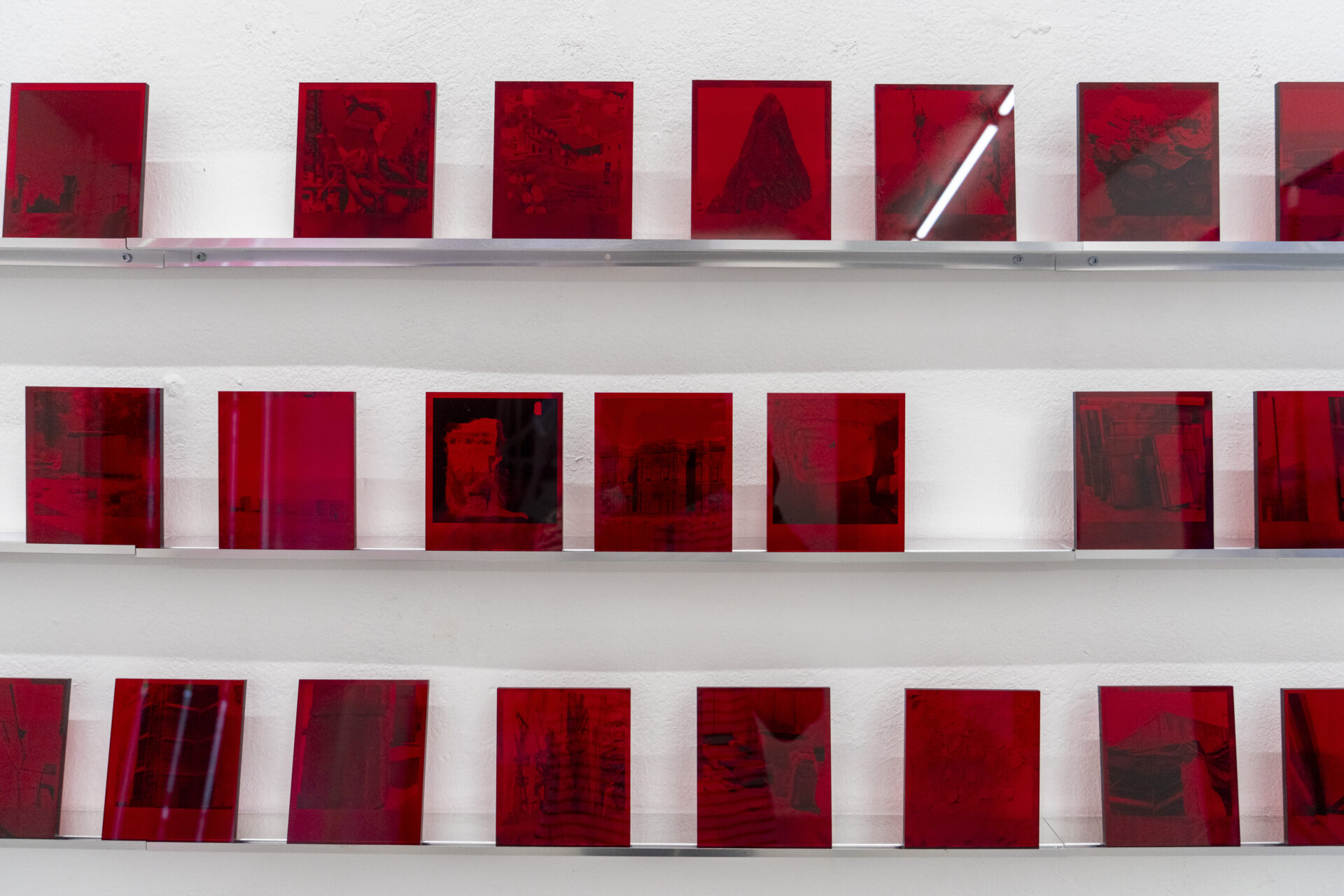
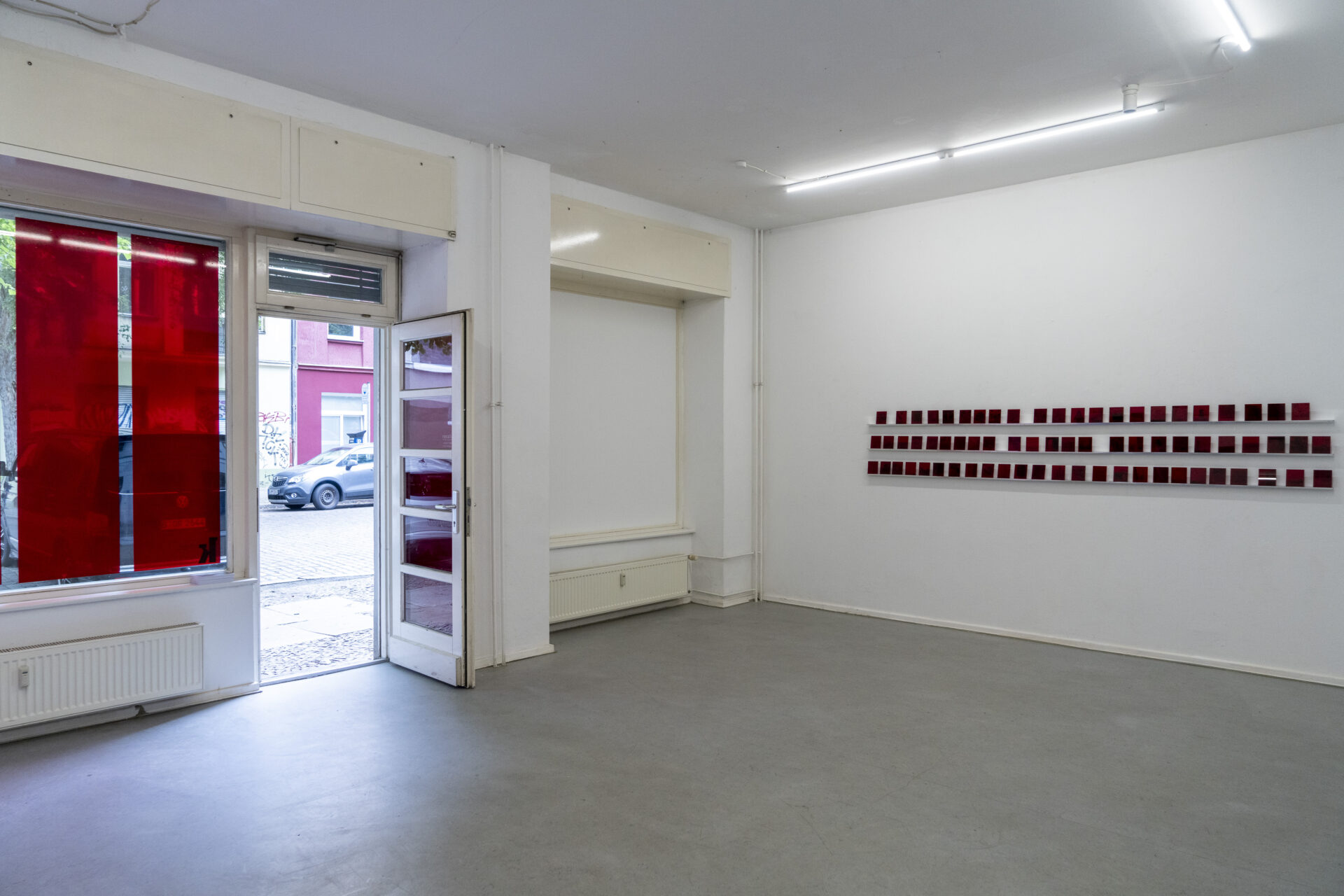
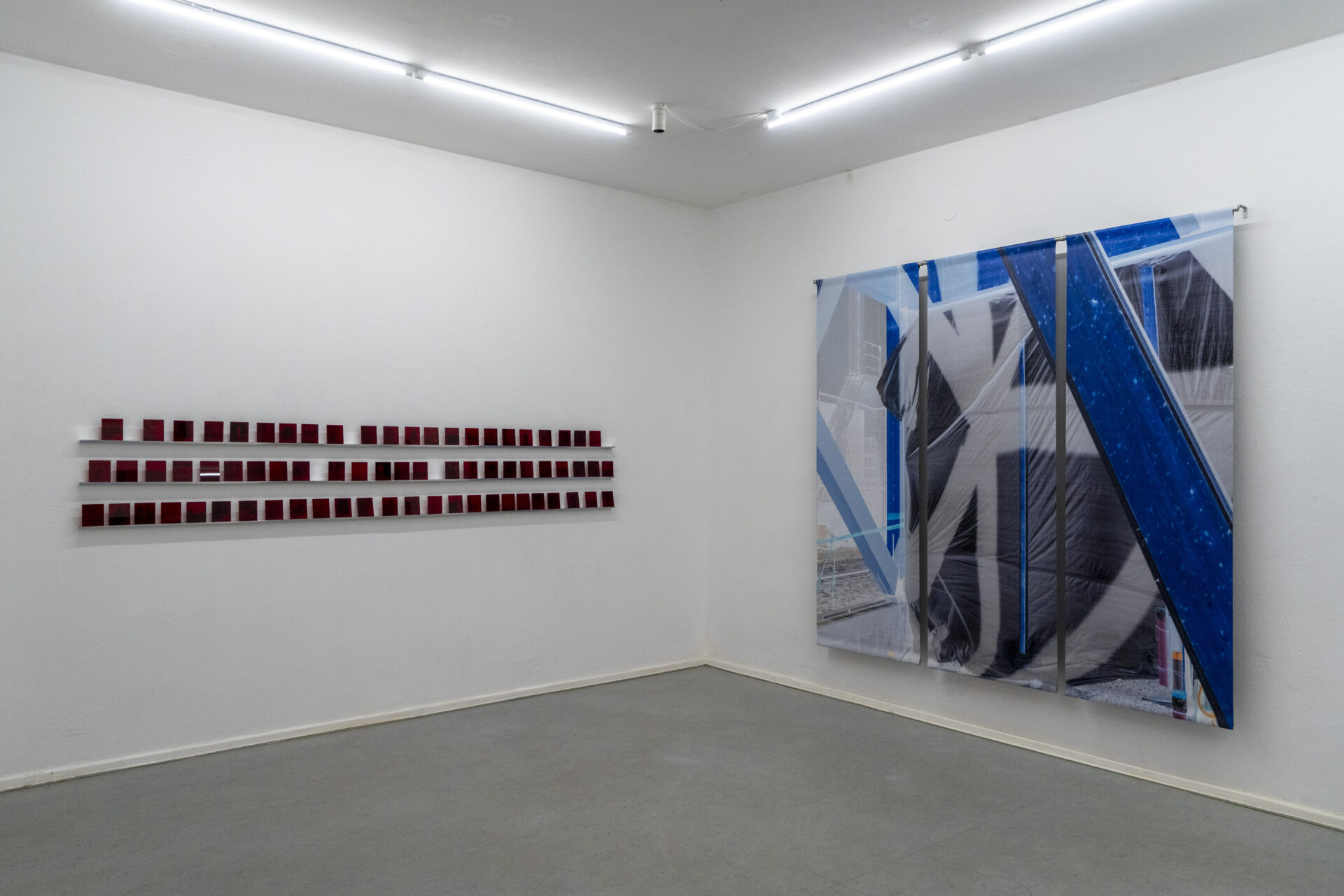
This logic of “paying attention” is particularly manifest in Les variables (2026). Composed of seventy-two photographs printed on red acrylic, the ensemble subverts the functioning of AI-generated images. Where algorithmic systems produce a new image from an index of references drawn from the vacuity of the Web, the artist proceeds in reverse. A few matrix photographs from several recent journeys to Turkey serve as the foundation for a series of selections, extractions, and reframings. These reconfigurations, in turn, generate new, autonomous images. The photographic gesture is thus displaced, (re)oriented, and decontextualized. The moment of shutter release no longer constitutes the image’s origin; the image continues to build after the shot is taken. It takes shape elsewhere.
Photographing becomes as much about looking as it is about dissociating and recomposing. The fragments of architectural patterns running through the series thus form a kind of visual repertoire in which the artist tests the image’s capacity to renew itself from within. Meanwhile, the red plexiglass recalls the safelight of the analog darkroom, and the format refers to that of a Polaroid. This reference to the medium’s history introduces a temporal tension between the imaginaries of analog photography and the realities of computational digital production.
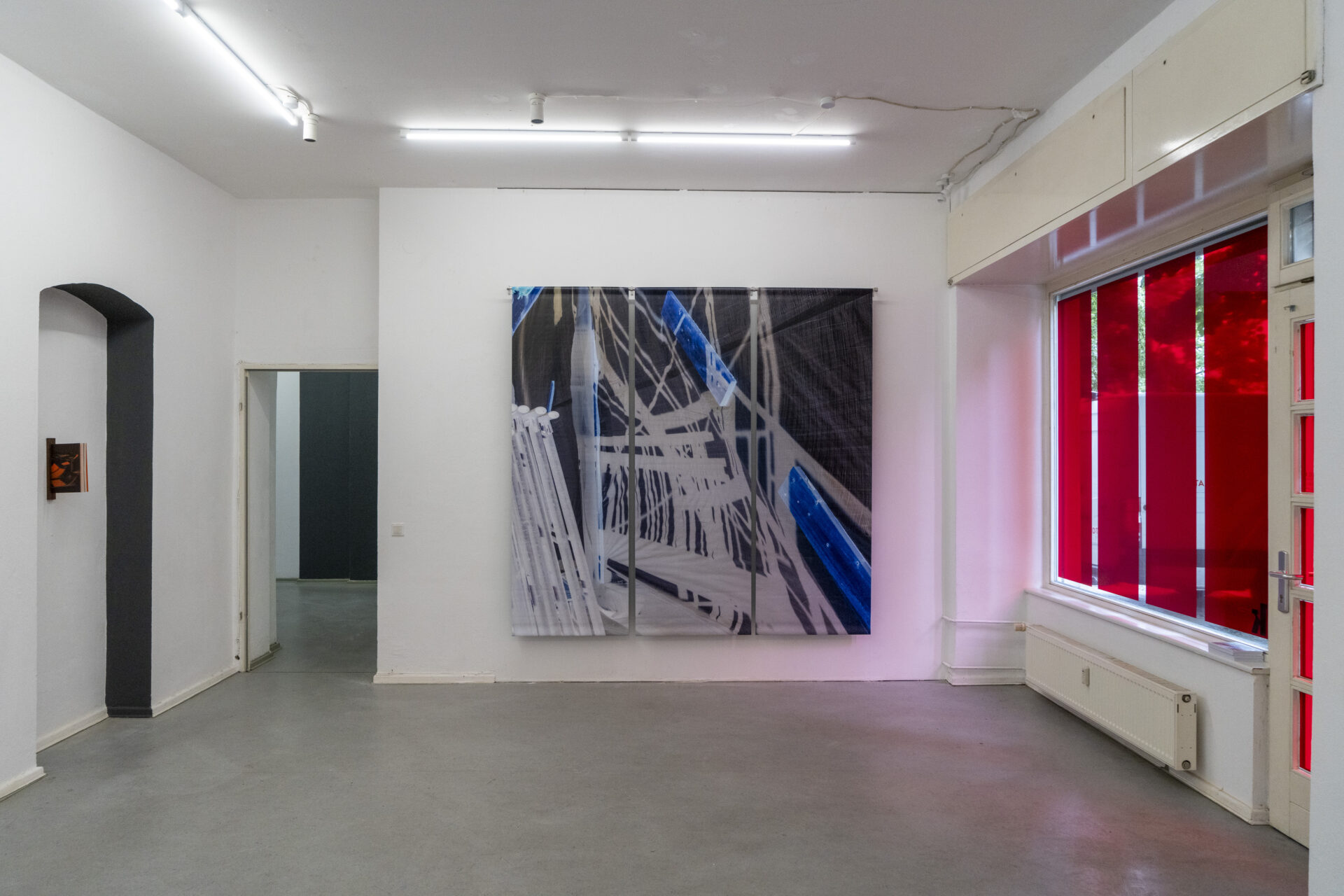
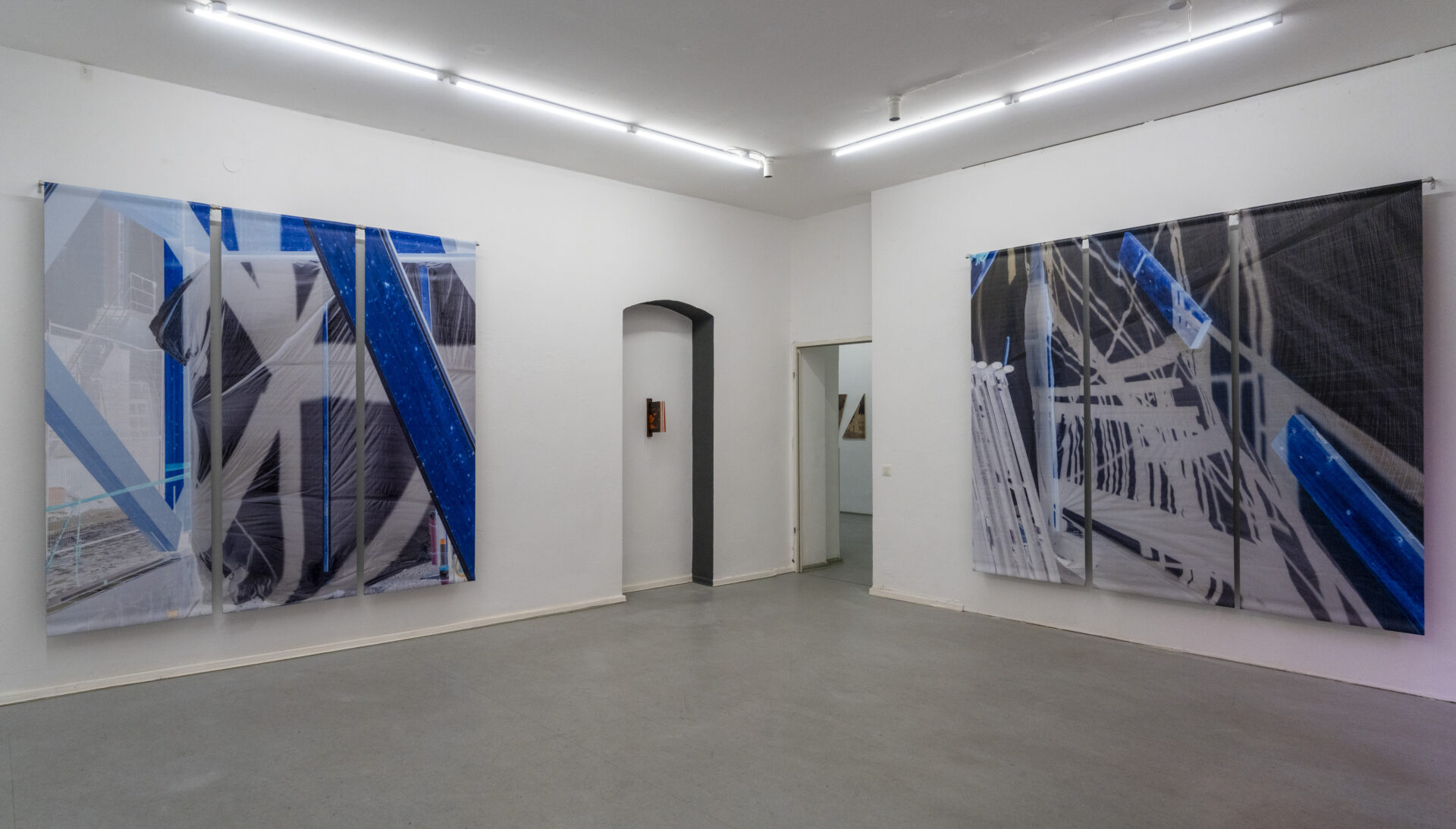
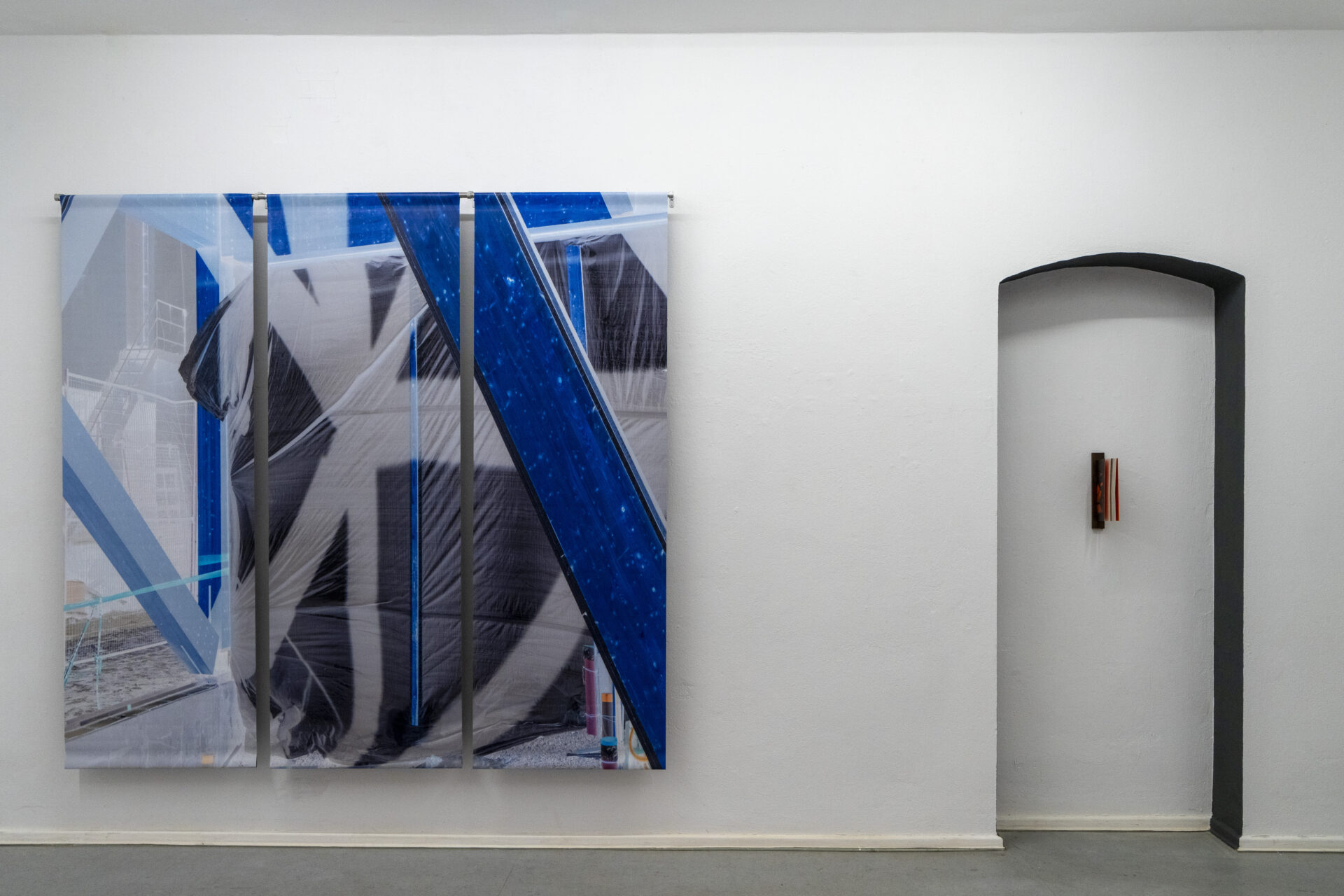
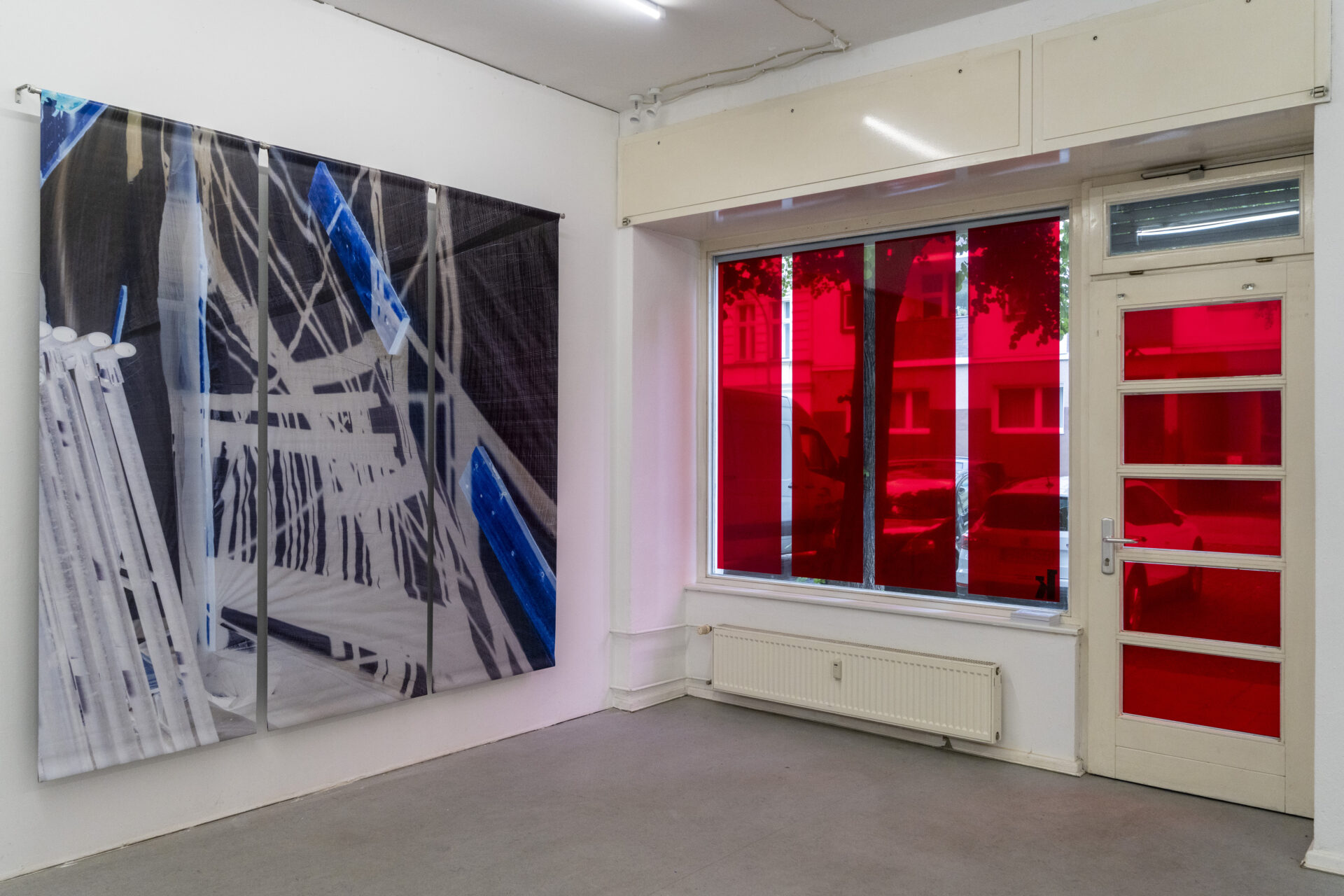
With Les espaces négatifs (2026), Rocher pursues this reflection by shifting attention even further toward what usually escapes the eye. The photographic diptych, printed on PVC tarpaulins, borrows the blue colorimetry characteristic of the cyanotype while exploiting the monochrome contrasts of black and white. Tonal inversions accentuate shadows and obscure spatial landmarks. The construction site appears less as an identifiable place than as a set of lines, volumetric masses, and forms in tension. The large square formats invite the viewer to consider everything that gravitates around the subject: the voids, the margins, the backgrounds, the residual and industrial zones which nevertheless actively participate in the organization of the images.
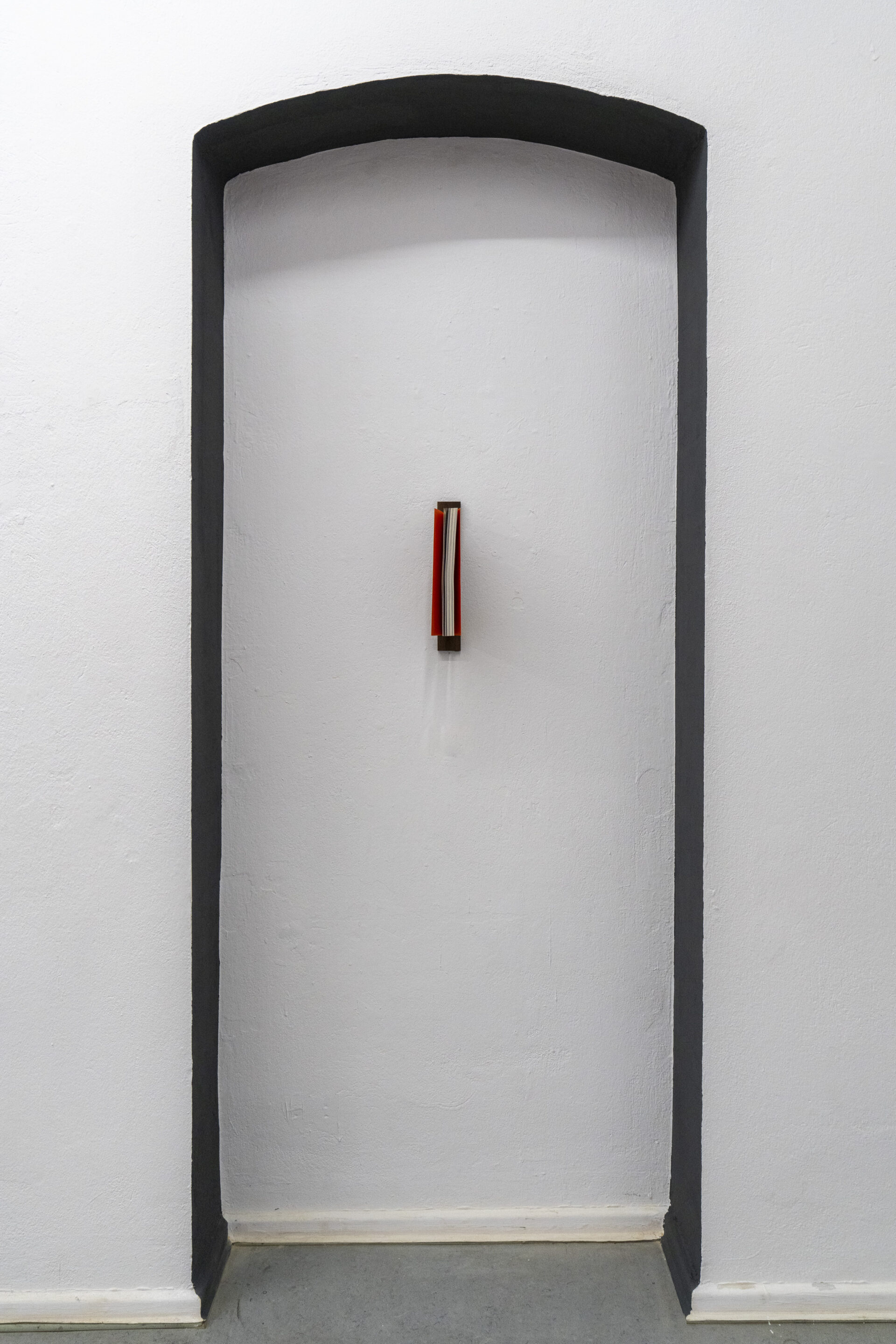
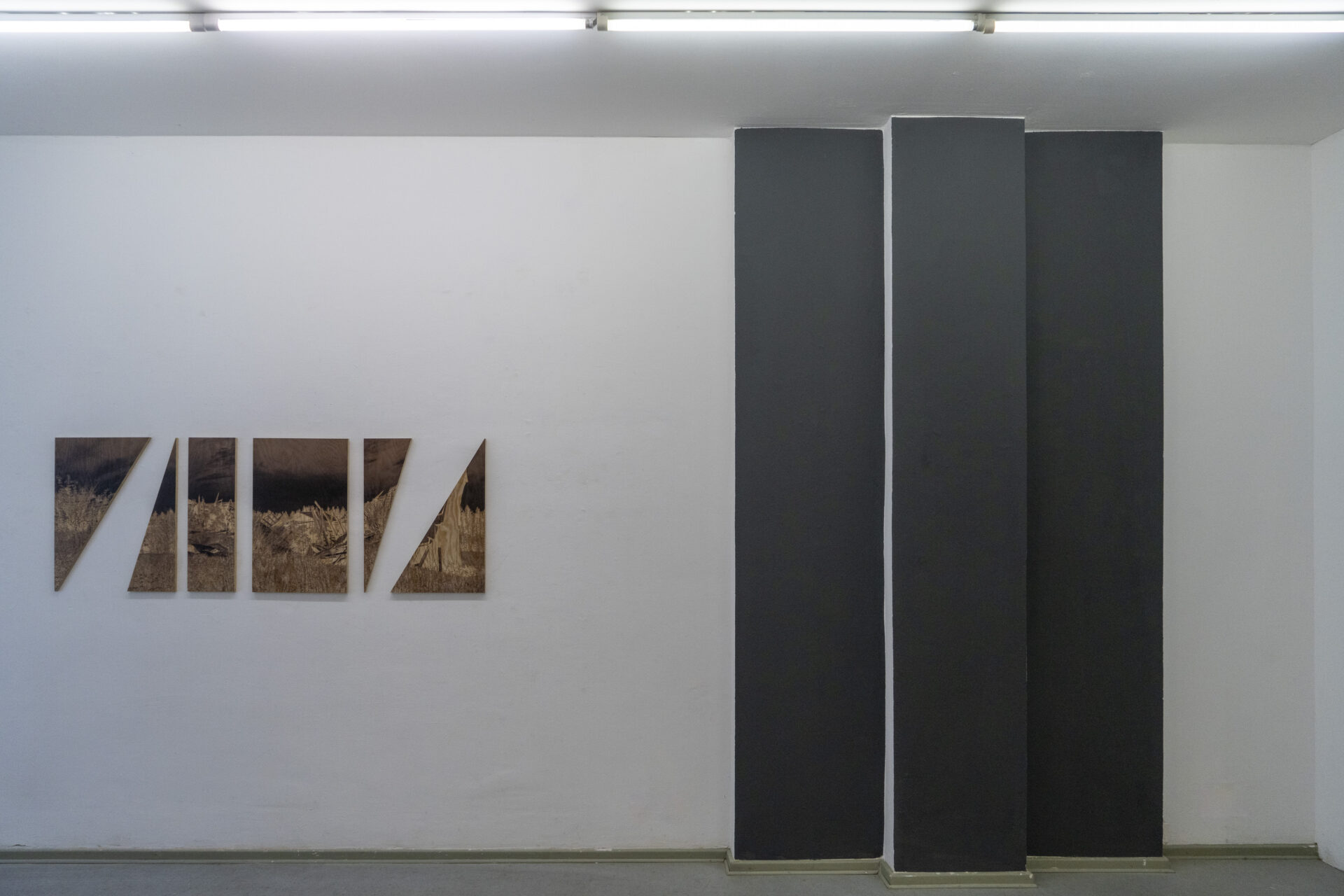
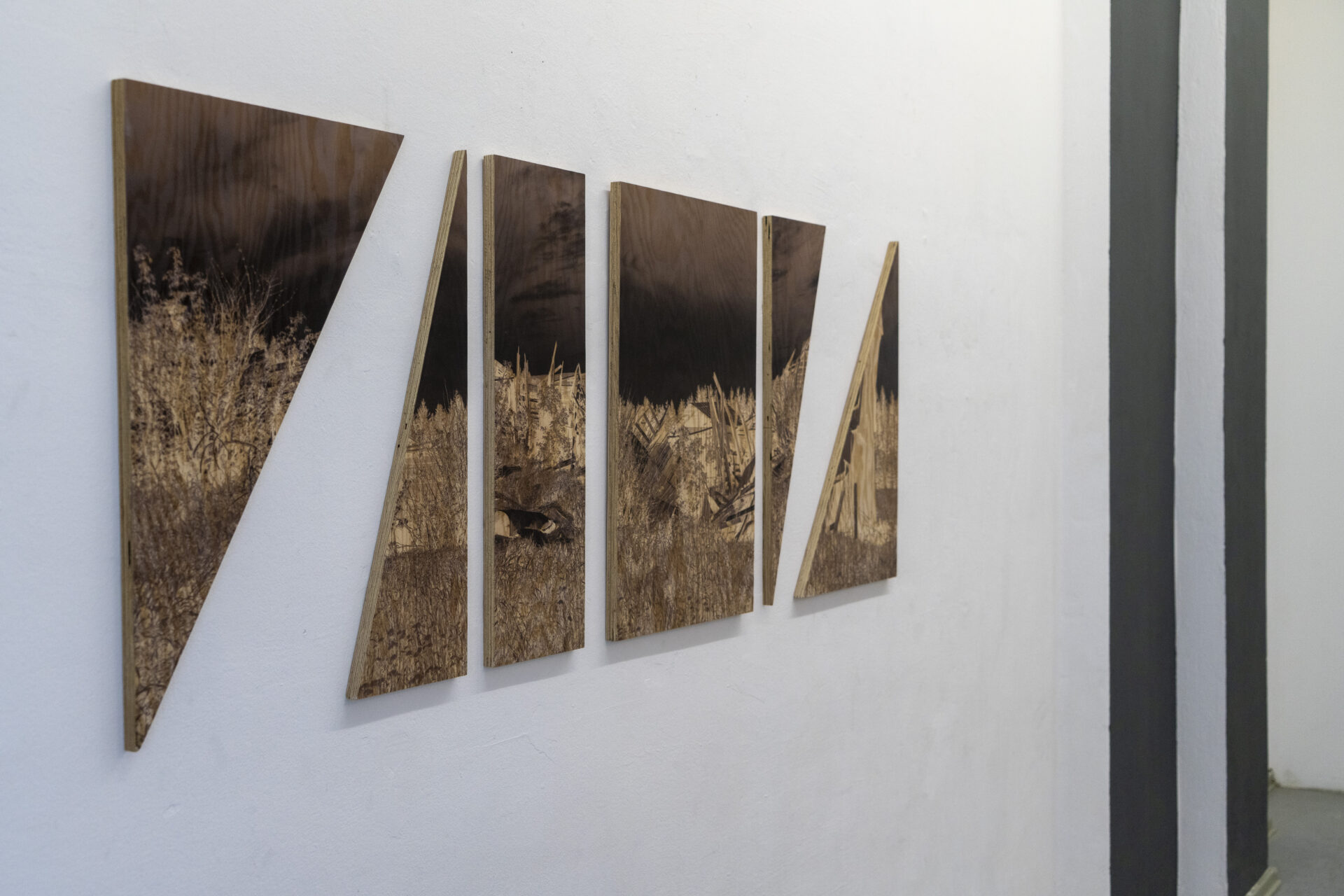
This dynamic reaches a kind of synthesis in Les possibilités obliques (2026). Printed directly onto recycled wood, the work combines two photographs of an abandoned architecture to construct a discontinuous landscape spread across six geometric panels. The different perspectives alternate without ever resolving into a fixed representation. The building seems to constantly oscillate between appearance and disappearance, memory and fiction. The support plays a decisive role here. Shaped and sanded in the studio, then printed, the wood retains its material presence while welcoming the image. Far from being limited to a supporting function, it participates in the production of meaning by restoring volume, thickness, and temporality to an otherwise forgotten architecture. The gaps between the panels themselves become constituent elements of the piece, introducing ruptures that prevent any unified vision.
Through this triptych, Lucie Rocher proposes a reflection on photography envisioned as a process of construction and destruction, rather than a simple act of recording. The images she erects do not seek to stabilize reality; they prolong its states of waiting and uncertainty. Like the construction sites that inspire them, her works remain deliberately unfinished, open, and susceptible to multiple reconfigurations. À peu de chose près thus reveals a practice where deconstruction becomes less a critical method than a necessary condition for learning to see otherwise.
Jean-Michel Quirion, curator